

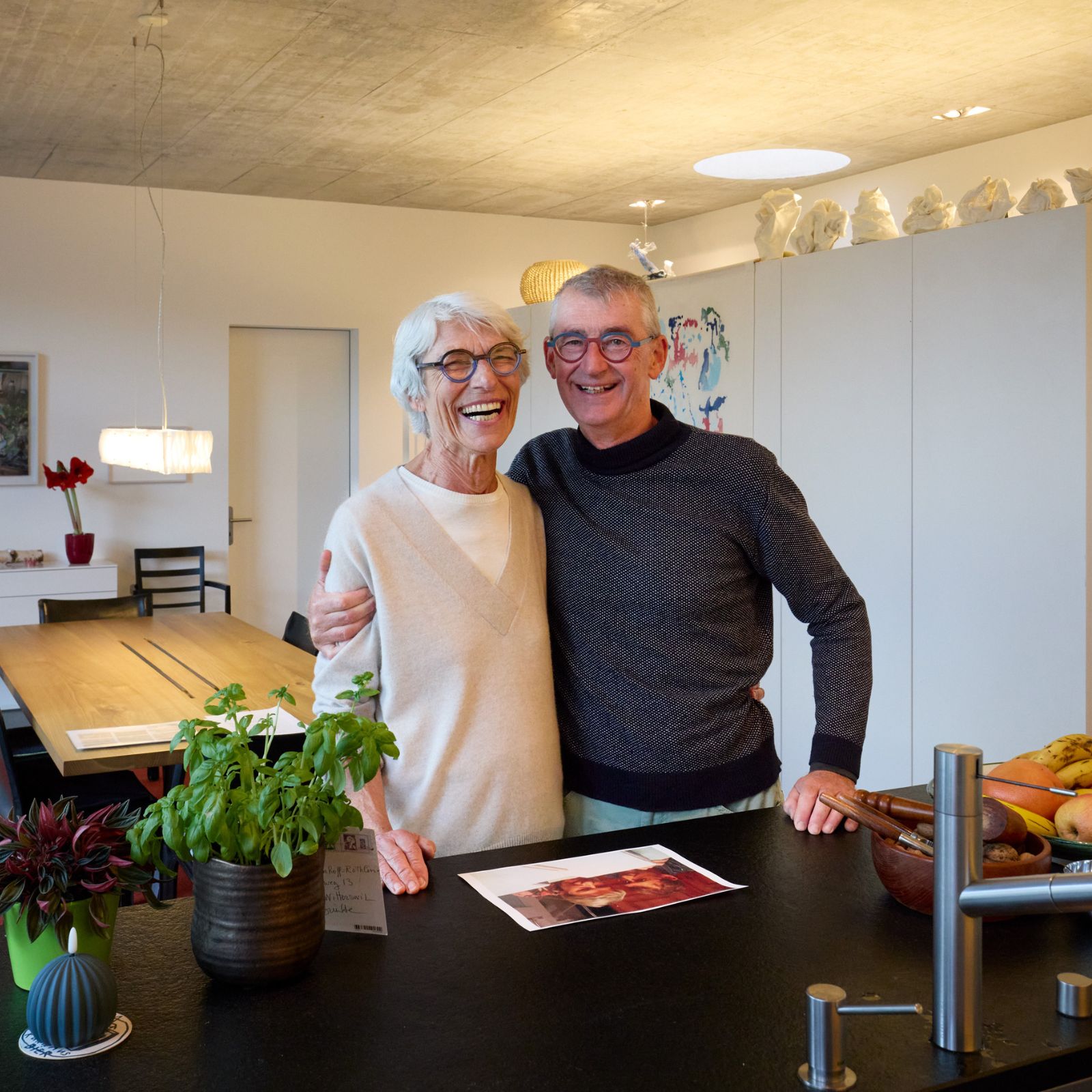
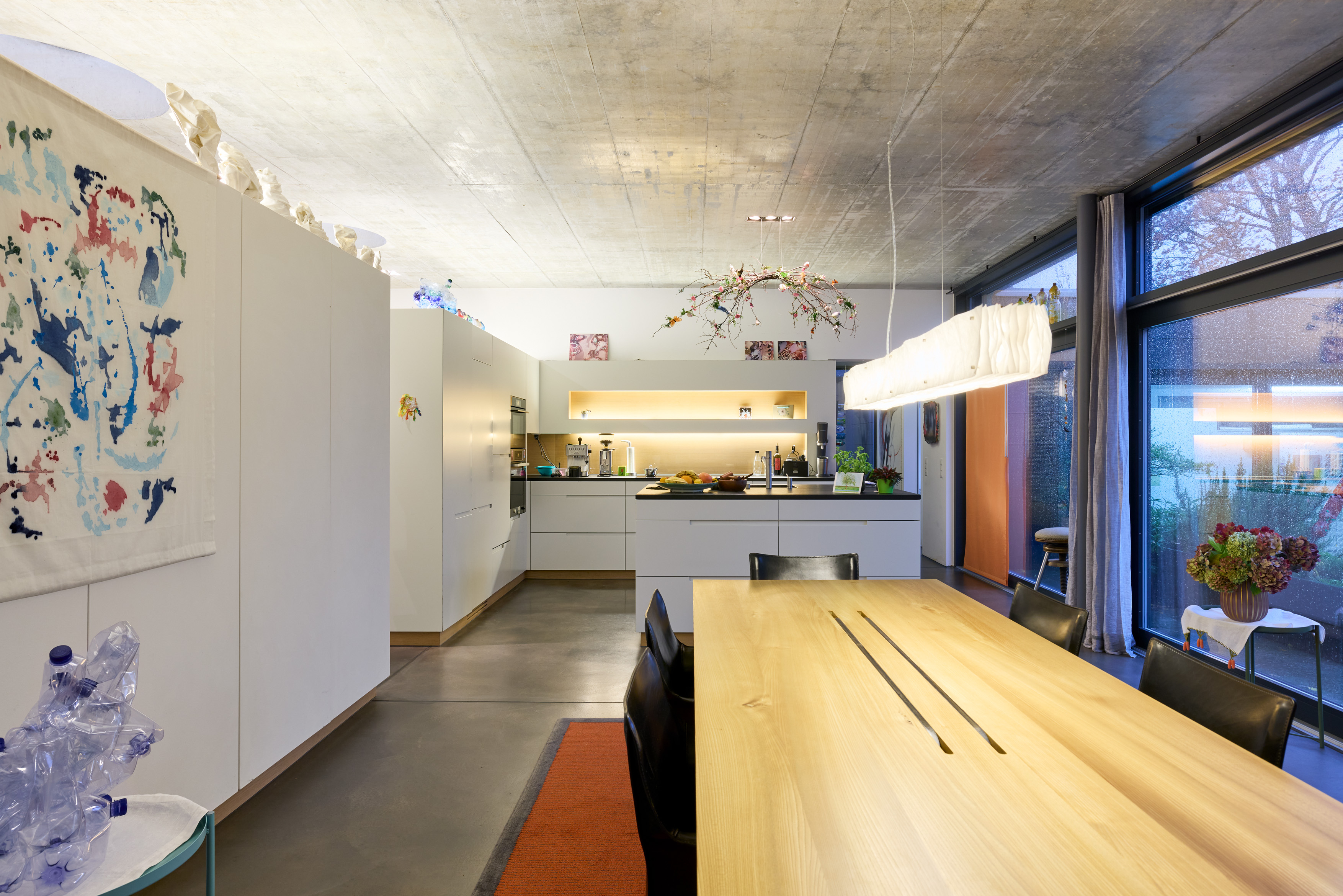
When you moved into the house in 2012, how did the generous, open-plan living and dining area facing the courtyard feel to you? And how do you experience this space today?
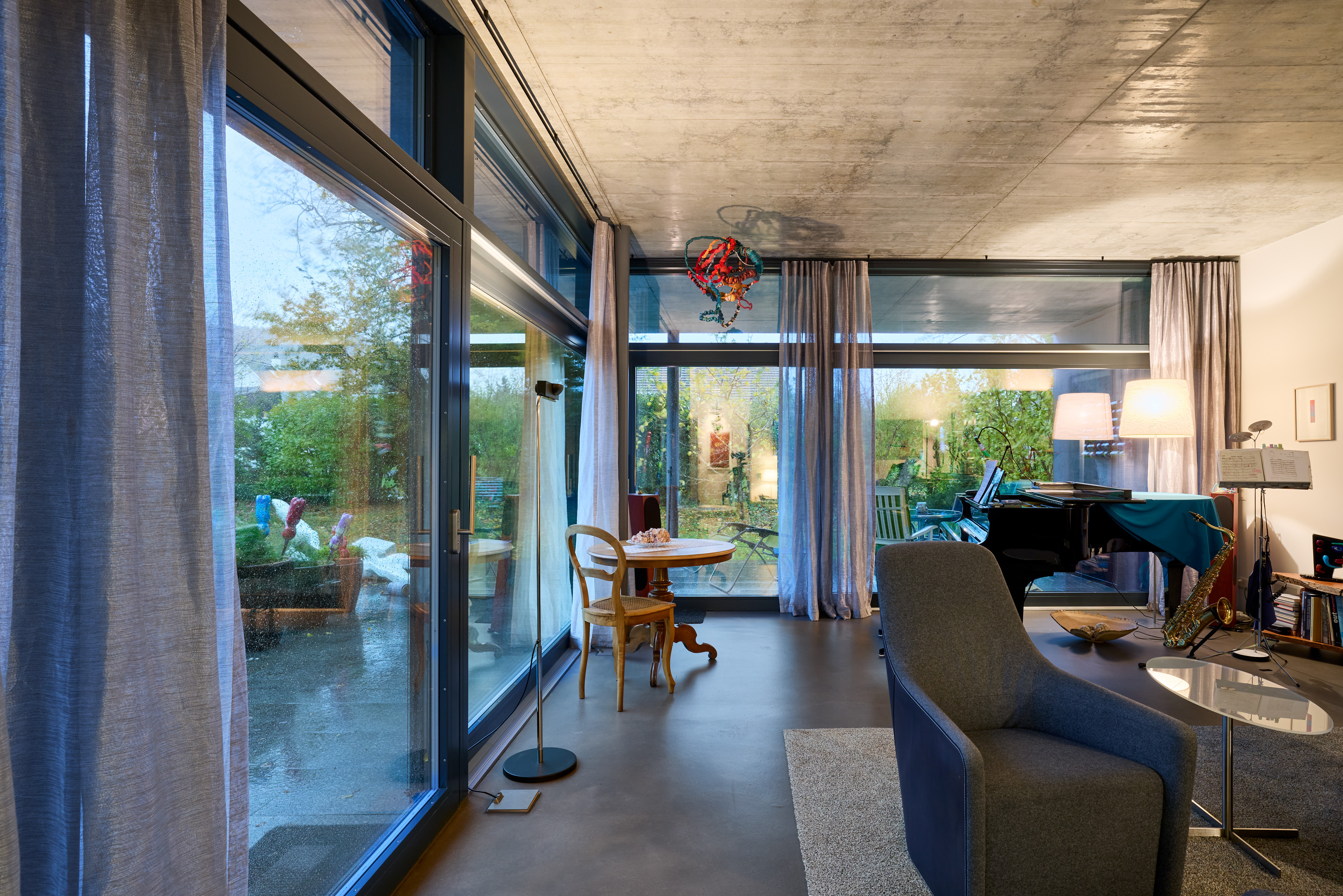
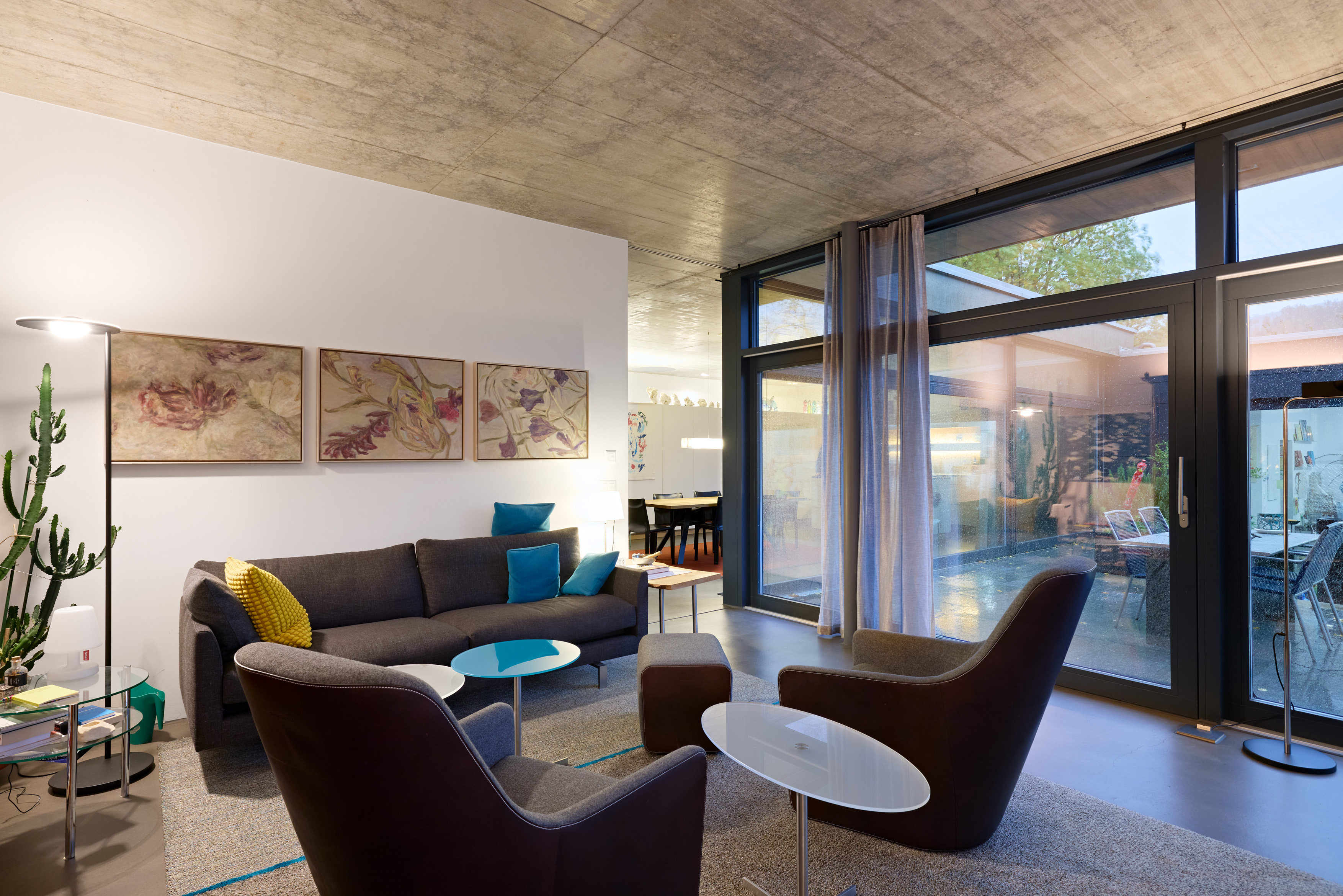
After moving in, it actually took a moment for us to get accustomed to the expansive living area. In theory and on plans, many aspects feel abstract: the distinctive ceiling height, the generous dimensions, the proportions, the exposed concrete, the large glazed fronts. We needed some time to adjust. Before, we had lived very differently. Gradually, we filled the space with life – now it is our home.
Are there areas or elements in the house that you still particularly appreciate today, perhaps even more than right after completion?
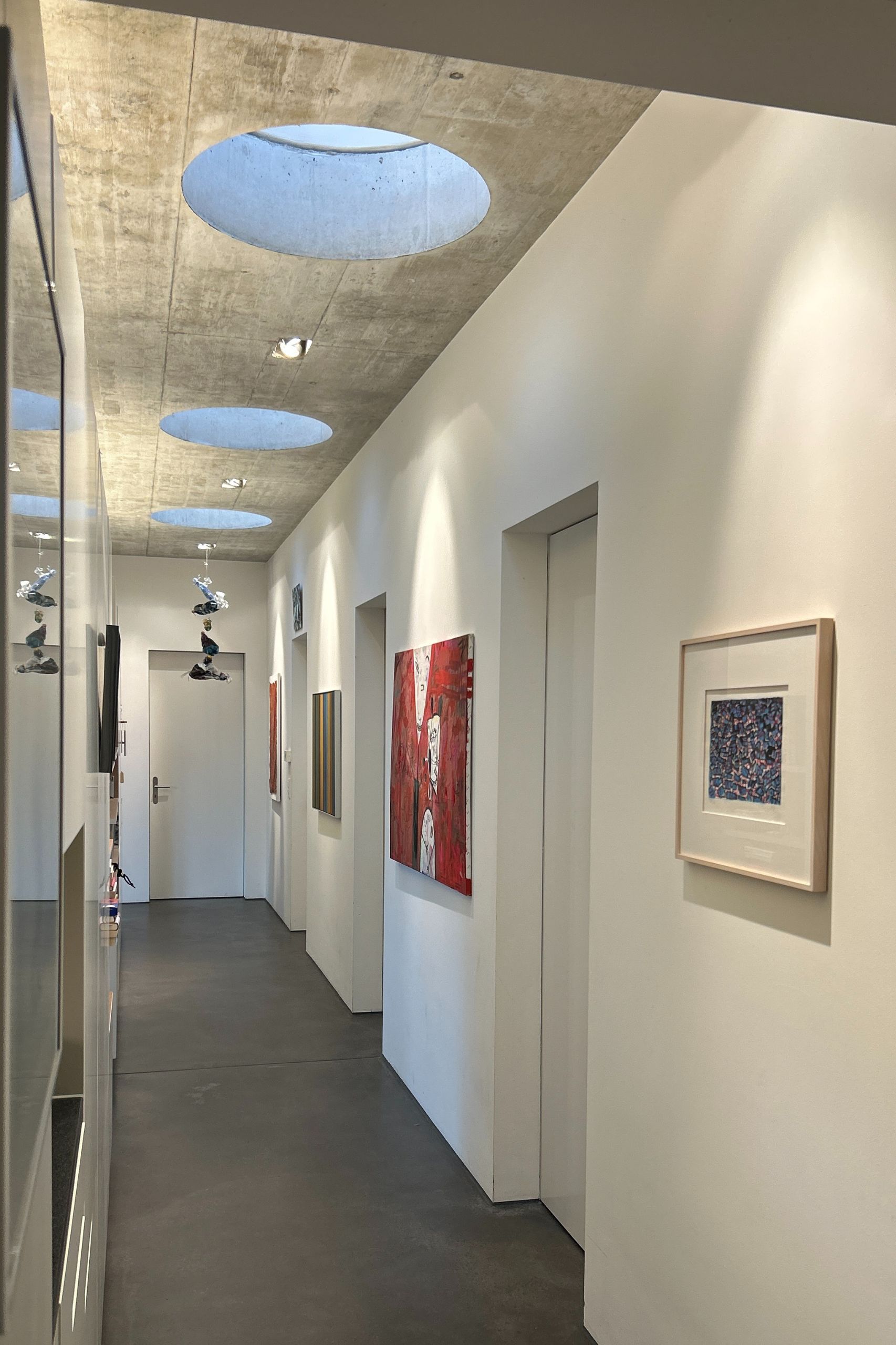
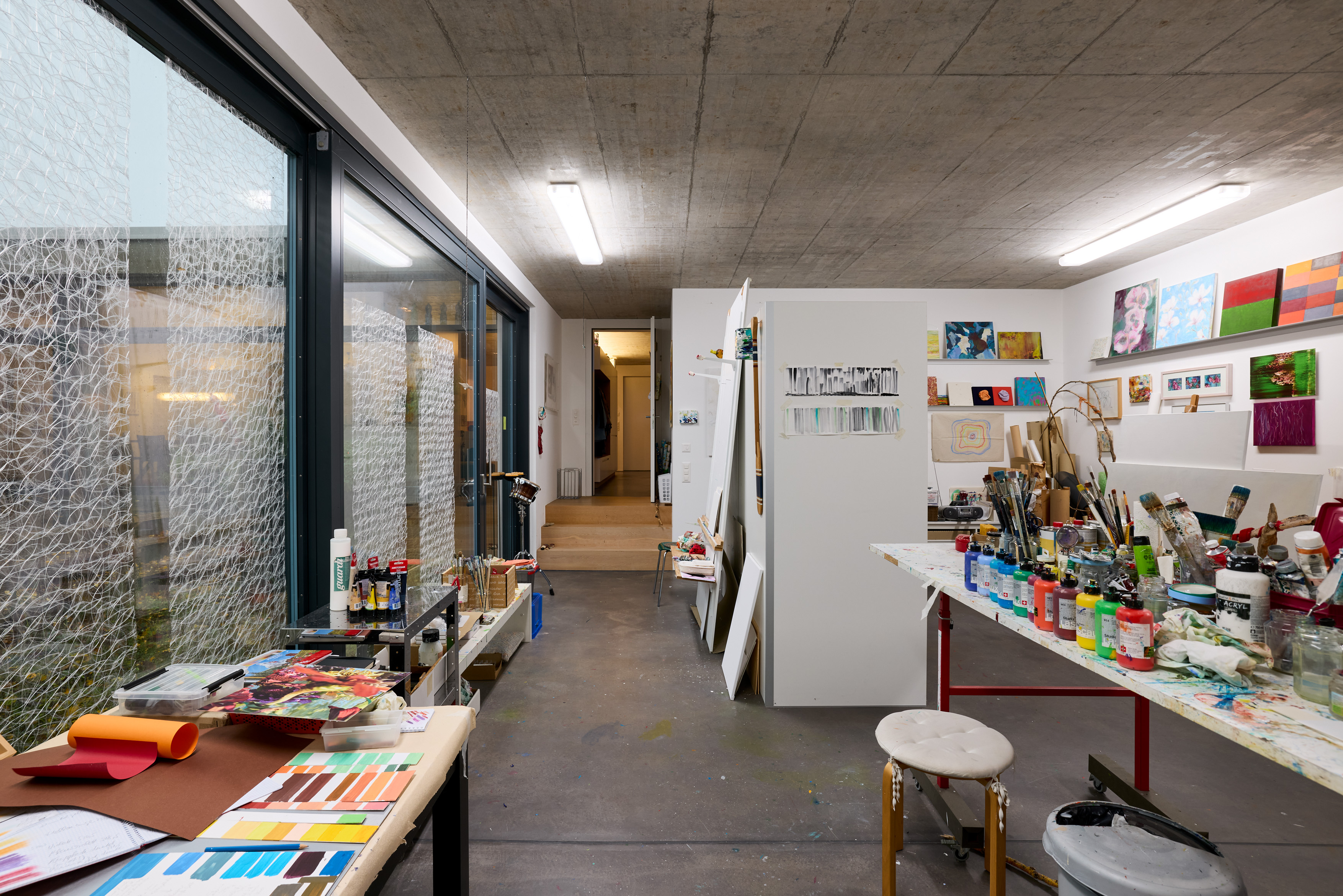
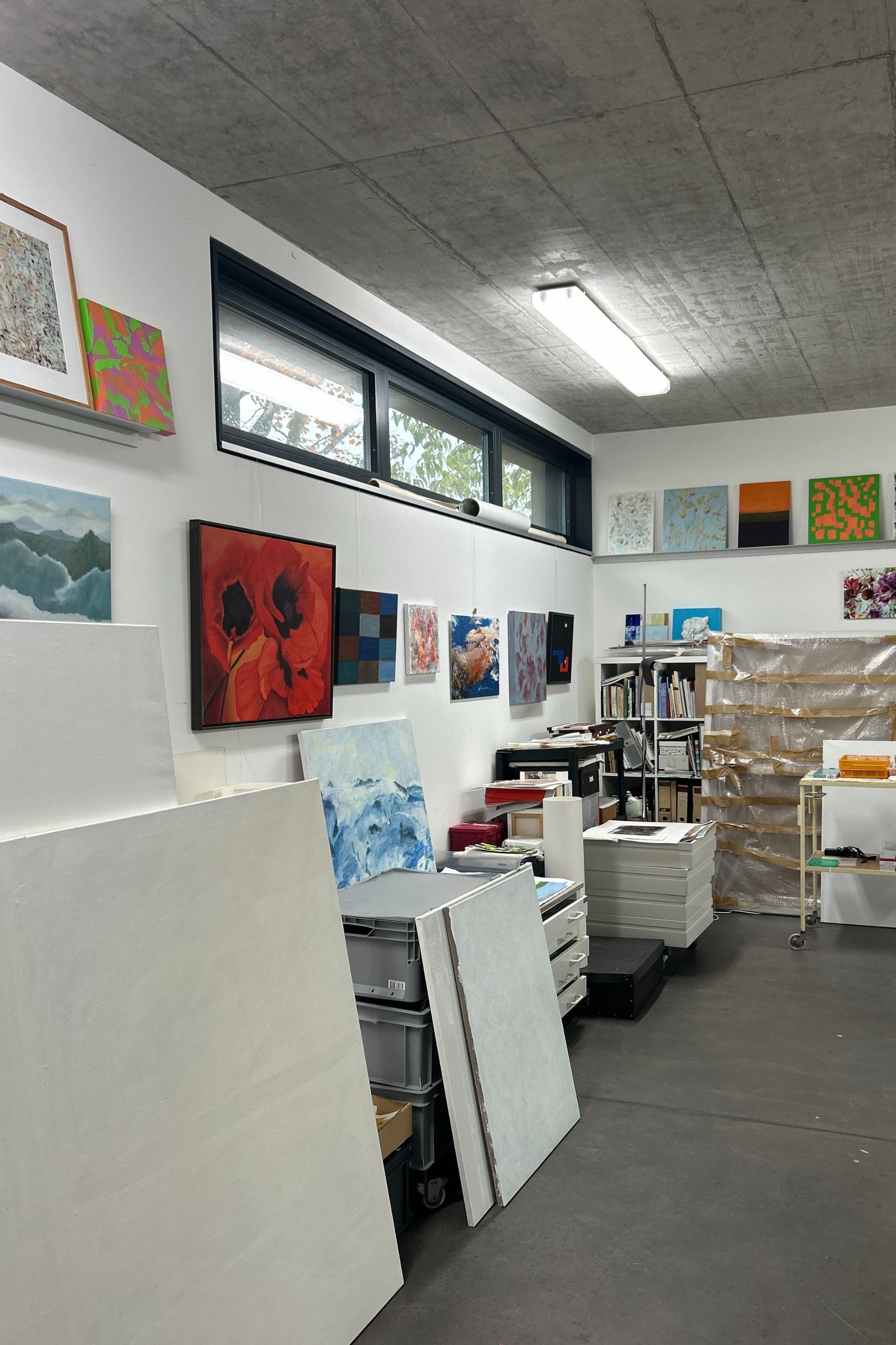
Over the years, we have come to value the spaciousness more and more. Each of us can pursue our own interests without feeling that we are too close to one another. My husband enjoys making music, and I work in the studio opposite. Each of us has a dedicated area, yet we are still together. Added to this is the view into the quiet greenery. That is truly wonderful. This quality contributes significantly to the fact that we enjoy spending time at home. Another aspect we appreciate more than ever today is the ground-level, single-storey layout. With a view to ageing, it offers clear advantages and makes it possible to remain self-sufficient in one’s own home in the long term. The convenient access to public transport is also beneficial, as it means we do not necessarily rely on a car.
Are there things you would design differently today?
We would probably plan the bedrooms somewhat differently today – using warmer materials such as clay plaster or timber flooring. In the living and dining area, curtains and a carpet provide a certain degree of acoustic regulation. For us, this works well, but since one becomes more sensitive to acoustic nuances with age, others might prefer a different solution. We are simply used to it as it is. It would also be practical to have the studio area more clearly separated. A more flexible use, for example through potential subletting, would then be easier.
The building volumes were executed with exposed concrete in the taller section and dark panels in the recessed area. How do you perceive the material selection today – both aesthetically and in terms of maintenance?
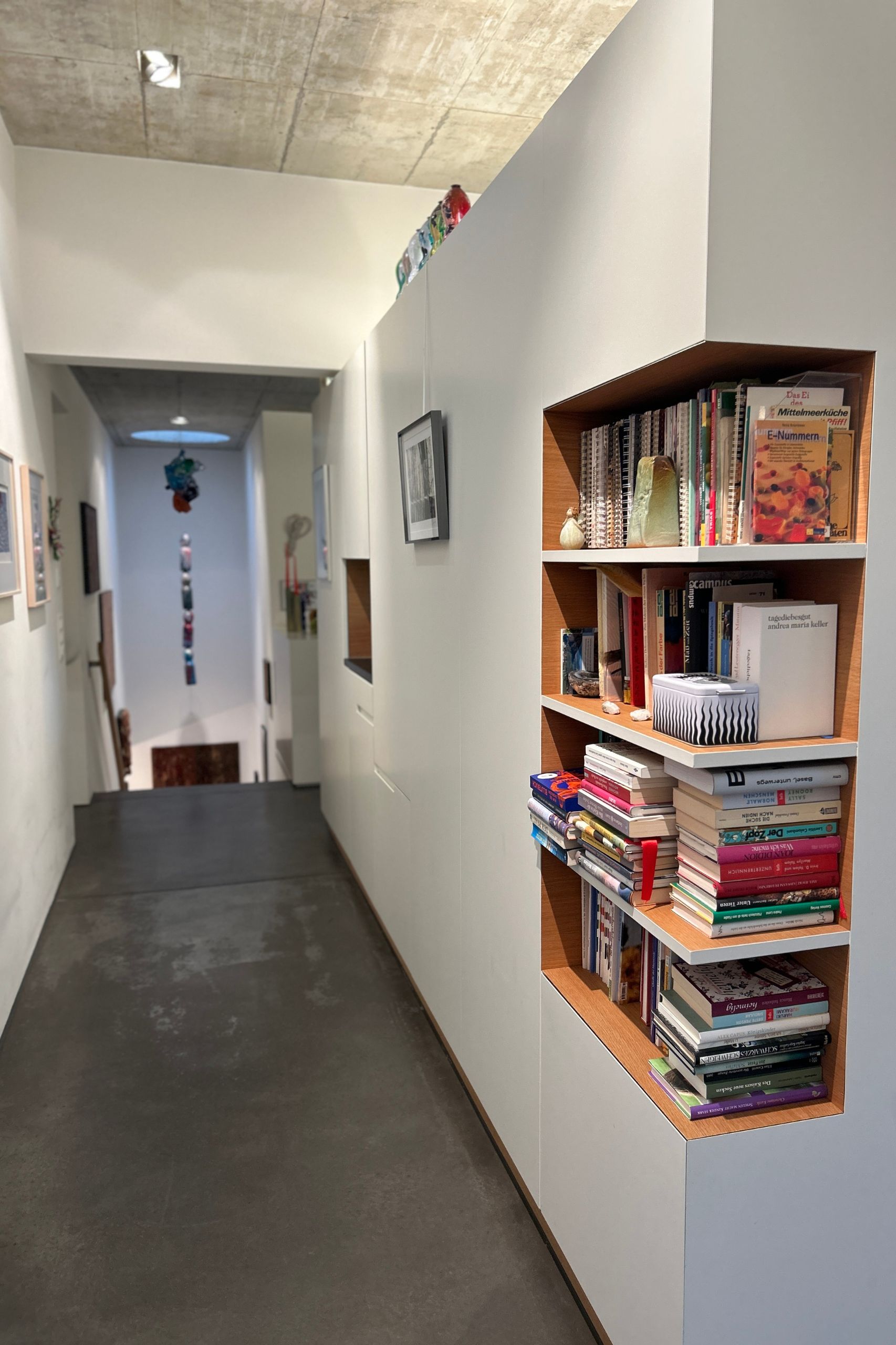
The architecture of the house is fundamentally straightforward and unadorned. The same applies to the exposed concrete. This aligns with our personal taste and still appeals to us today. In addition, the pigmented cement floor with its subtly irregular texture is very easy to maintain. At the same time, especially in the darker months and without heating, it can feel rather cool, which influences the atmosphere. Hence, as mentioned earlier, the idea of timber flooring. From today’s perspective, a balanced mix of warm materials combined with the cooler architectural language of the house would certainly also have its charm.
The house was built according to Minergie standards and equipped with a heat pump with geothermal probes and photovoltaic panels. How do you experience the technical systems today – do they meet your current expectations regarding comfort and sustainability?
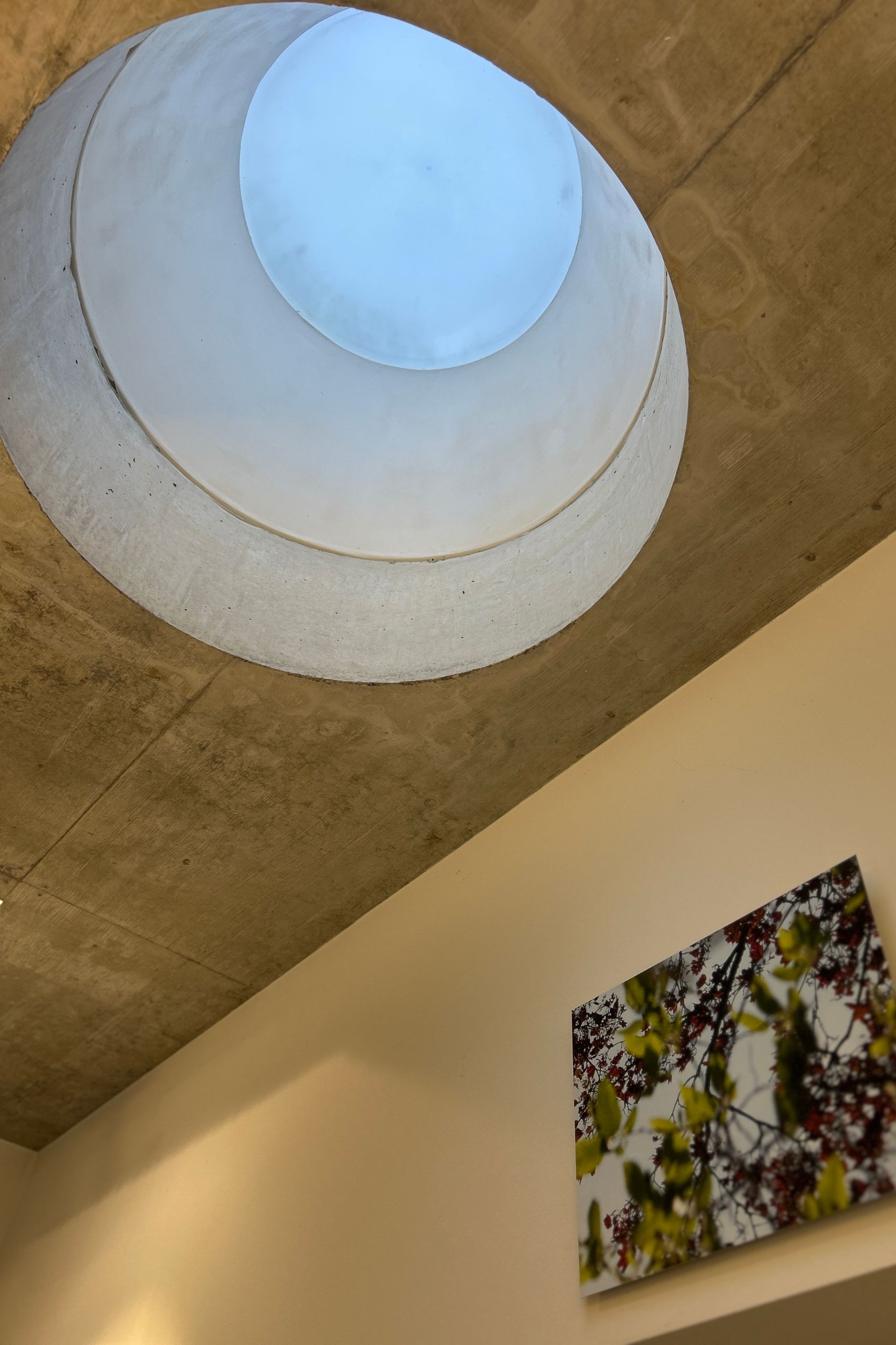
We consider the system a conscious investment in sustainable energy use, fully aware that we occupy a considerable amount of space for living and working. Sustainability also entails responsibility – not least regarding the demands placed on the building. We find the generous glazed fronts particularly pleasant, as they allow abundant daylight into the house. At the same time, despite triple glazing, they present thermal challenges: in winter it can be noticeably cooler, and in summer they conduct heat. The controlled ventilation system contributes significantly to good indoor air quality and could, in the future, be supplemented with a cooling function for summer. Furthermore, almost all windows are at ground level, which poses a security risk and makes ventilation during absence difficult.
The layout orients the living and dining areas as well as the studio toward the enclosed courtyard. How important is the indoor–outdoor relationship to you today, and what role does the courtyard play in your daily life?
We enjoy the view from the studio across the garden and terrace towards the living and dining area, and vice versa – lots of greenery and nature. We appreciate this, and the reflections in the glass create a beautiful image depending on weather and time of day. At the same time, the garden and terrace are always visually present due to their position, making completely independent use practically impossible. Whatever happens outside is always visible from inside. One is always in view. For us, this is not an issue. However, if the studio were to be sublet one day, this could become a challenge, as one would inevitably be in the field of vision of the other party.
Looking to the future: Are there adjustments you are planning to implement? (e.g. spatial layout, daylighting, material selection, technical aspects)
We are not entirely certain yet regarding future modifications. As mentioned above, there are some ideas and considerations. An aesthetically refined acoustic element in the dining area would also be welcome. At the same time, any change involves effort, so we remain undecided for now.
What experience or advice would you give to homeowners who are building today?
My most important advice to homeowners today would be to develop an early and realistic understanding of their own lifestyle – both in their current life stage and with regard to the foreseeable future. A modular concept is certainly advantageous. It is worthwhile to consider how one lives as an individual, couple or family, which professional and personal activities take place at home (such as home office), and how much time is actually spent at home compared to sports, culture or travel. A realistic sense of space is essential: needs for daylight, privacy and everyday use should take precedence over idealised dream-home images. Practical aspects such as acoustic separation are also important – sliding doors often provide only visual separation, not sound insulation. This is indeed something we would likely approach differently today. The activities of residents – making music or working, cooking and the associated smells – all of this should be planned so that, ideally, none of it becomes disruptive. Maintenance should not be underestimated either: hard-to-reach windows or specific handle designs require regular upkeep.


.jpg)
.jpg)
.jpg)

.jpg)

.jpg)
.avif)
